
I remember the first time I opened the Live Blackjack slot and spotted the auto play button placed neatly beside the spin control https://live-blackjack.eu/. I paused, debating whether letting the reels run on their own was a quick path to better play or a fast track to depleting my balance. That hesitation is exactly why I assembled this guide together. The Live Blackjack slot combines the known thrill of a blackjack table with the rapid pace of a five-reel video slot, and its auto play panel is far more nuanced than a simple repeat-spin toggle. When you comprehend the specific loss limits, single-win caps, and conditional stop triggers hidden in the settings, you transform a hands-free feature into a real bankroll management tool. I’ll guide you through every auto play parameter the game presents, clarify how UK-facing versions modify those options to meet local regulations, and illustrate how to customize the settings so they function for your session style rather than against it. By the time you complete reading, you’ll know exactly how to configure auto play to shield your funds, go after bonuses sensibly, and still enjoy the live-dealer atmosphere the slot recreates.
When to Change from Auto Play to Manual Spins
I have developed a personal rule for the Live Blackjack slot: the moment the free spins round activates from an auto play batch, I let the feature complete its set of ten or fifteen spins automatically, but as soon as the round ends and the win is added to my balance, I stop the remaining auto spins and take manual control for at least ten to fifteen spins. The thinking is that the transition out of a bonus round often changes my perception of risk. Auto play hides the individual spin cost from my immediate awareness, and after a feature that may have paid anywhere from fifteen to over one hundred times my bet, I want to slow down and reconsider whether the session’s equity has shifted in a way that suggests I should lower my bet size or pocket the win. Additionally, some UK builds of the game erase the loss limit counter when the feature ends, meaning the auto play loss stop that was set earlier no longer indicates the state of your balance since the feature drop. Manual spinning for a short while gives me room to adjust the limits before I recommit to auto play, and it keeps me from mindlessly rolling a feature win back into the game.
How UK Regulations Shape Auto Play Settings
If you are loading the Live Blackjack slot from an operator licensed by the UK Gambling Commission, you will observe that the auto play panel can look a little more minimal than the full-featured version I have described. UK rules prohibit auto play from being offered with a «spin until feature triggers» option, so you will not see a toggle that lets you run reels indefinitely in quest of free spins. Quick-spin or turbo-spin modes must also remain strictly manual, meaning you cannot stack accelerated spin speed with an auto play batch. These restrictions are in place to reduce play intensity and make the cost of each decision more clear. On the Live Blackjack slot, the UK-compliant auto play version still includes spin-count stops, loss limits, and win limits, but the max spin batch is often restricted at one hundred, and the balance-decrease stop must be shown prominently. I actually believe these guardrails improve the auto play experience by pushing you to reconnect with the session result at reasonable intervals rather than allowing you zone out. When you set your auto play, look for a small text note in the panel that validates the version running, because some casinos may impose an even tighter thirty-spin maximum for bonus buys or other promotions.
Slot Theme, Reels, and Winning Lines at a Glance
The arrangement of reels in Live Blackjack employs a fairly standard five-reel, three-row grid, but the way paylines work is where the game brings in its first tactical hint. There are 20 fixed win lines running left to right, and you cannot change the active line count. I actually prefer this fixed-line approach for auto play because it takes away one variable from the equation; you do not have to think about whether changing your line selection would have triggered a different feature outcome. Wins are determined by matching at least three symbols on a line starting from the leftmost reel, except for the golden scatter chip that awards anywhere on the grid. The most valuable standard icon is the blackjack hand itself, awarding a multiplier of twenty times your line bet for five of a kind, while the card royals range from three times to eight times your line stake. The wild symbol, which displays an animated neon dealer silhouette, appears on reels two, three, and four and replaces for all regular paying symbols but not for the scatter. Understanding this cap on wild placement means you will never see a full screen of wilds, so the maximum base-game win is tied to the symbol collection, something I’ll explain when I discuss the paytable math shortly.
Special Features That Maintain the Action Going
The game hinges on two central bonus elements: a scatter-triggered free spins round and a cascading multiplier path that builds during those free games. The scatter symbol emerges as a holographic casino chip bearing «Free Spins» text, and hitting three or four scatters anywhere on the reels from a single manual or auto spin awards ten or fifteen free spins respectively. Three scatters is the more common trigger during auto play, simply through probability. Before the free spins start, the game arranges a dealer shoe graphic on screen and reveals a starting multiplier of either two times, three times, or five times your win for that round. I should point out that every winning combination during free spins increases the multiplier by one step for the following spin, which indicates a cluster of consecutive hits can rapidly increase a modest line win into something substantial. The free spins round also includes a single sticky wild that moves across reel three on every spin, significantly boosting your hit frequency. Unfortunately, free spins cannot be retriggered from within the feature, so the round length stays exactly as awarded. The mix of a fixed number of spins, a walking multiplier, and sticky wild signifies that free spins feel quite different when auto play initiates them versus when you land the scatter manually, simply because you are not straining your thumb on the stop button. I cover how to manage that in the auto play behaviour section shortly.
Návratnost hráče, Volatility, and Nejvyšší možná výhra
When I test any slot with auto play in mind, the return-to-player percentage and volatility rating become the hlavní numbers I check, because they dictate how long a set of one hundred auto spins is likely to last. The Live Blackjack slot typically carries an RTP value of 96.2%, which sits right at the industry average for modern video slots. Some operators may run a slightly lower configuration, so I always doporučuji you to open the in-game help file where the exact RTP for that specific casino version is disclosed. Volatility is rated medium-high, which in practice means you will experience sequences of smaller line wins interrupted by occasional clusters of free-spins triggers and wild-assisted combos. The maximum win is capped at five thousand times your total bet per spin, a threshold that can be hit during the free spins feature when multipliers reach their upper end. That kind of top-heavy distribution means auto play can feel frustrating during the quiet stretches, but the potential for a single feature drop to recoup fifty or more spun spins is very real. I find it helps to set my auto play loss limit thinking about those swings specifically rather than a generic daily budget number.
Meet the Live Blackjack Slot Slot
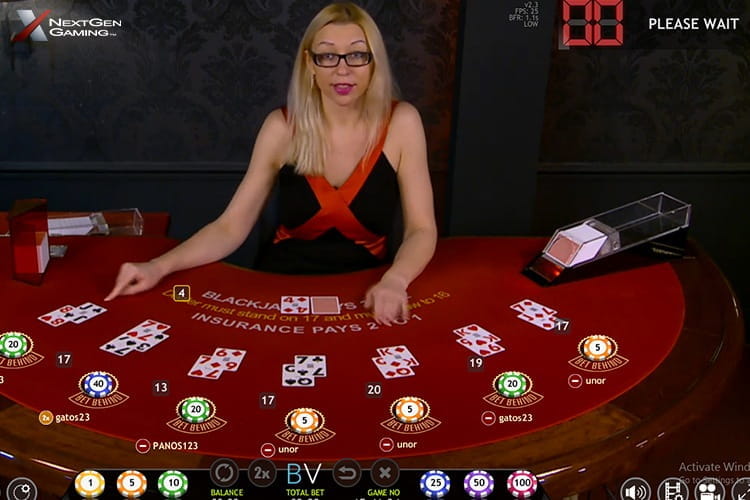
Blackjack Live is not a broadcast table game, despite what the name might indicate at a glance. It is a fully animated video slot that draws its visual identity and soundscape from a high-end blackjack studio. Red felt tables, polished chip stacks, and a dealer’s gloved hand distributing cards off the right side of the screen set the mood, while the reel grid sits front and centre where the player’s hand would usually be. The developers crafted every symbol to echo blackjack iconography: classic playing card royals done in glossy casino typography form the low-value tier, while premium symbols include a blackjack hand showing an ace and a king, a close-up of a single burning question card, and a dealer button. A smooth jazz piano loop plays behind the spinning reels, and win celebrations trigger a subdued chip-clatter sound rather than an explosion of arcade noises, which keeps the experience mature and focused. I find it strikes a genuine balance between slot energy and table-game calm, something that really matters when you plan to leave auto play running for a longer spell and do not want constant audio fatigue.
Leveraging Auto Play as a Learning Tool
An aspect I infrequently see discussed is how auto play on the Live Blackjack slot can in fact teach you the game’s rhythm if you employ it in short, observational bursts. I sometimes set a batch of fifty spins at a base ten pence total bet with simultaneously a small loss limit and a single-win stop of fifteen times my bet enabled, then observe the reels spin without any intention of profit. I focus on how often the sticky wild appears in the free spins, how the multiplier increments, and how the scatter symbol tends to land in clusters or long droughts. Because I have eliminated my own spin-tap pace, the true statistical frequency of features becomes more apparent over multiple groups. Once I have absorbed that structure, I return to manual play with a much clearer awareness of when to reduce my bet sizing and when to increase a little further. This works only if you approach those monitoring batches as data-gathering with a strict tiny budget; do not allow the auto play operate as a secret hope for a big win while you convince yourself you are «just checking.» I keep a spreadsheet of trigger gaps, and I can say with certainty that the game’s observed behaviour closely aligns with its advertised volatility once you take out human spin-speed fluctuation.
Final Thoughts on Getting the Hang of Live Blackjack Slot Auto Play
After running hundreds of auto play sessions on the Live Blackjack slot, I have settled on a configuration I come back to again and again: one hundred spins, a loss limit of sixty times total bet, a single-win stop at sixty times total bet because that threshold overlaps nicely with a decent free-spin payday, and the balance-decrease toggle turned on. I adjust those numbers only when the session bankroll changes by twenty-five percent or more. This routine is unexciting in the best possible way; it holds the game in entertainment territory and stops me from making the sort of impulsive «just one more batch» decisions that turn a pleasant session sour. The Live Blackjack slot’s strong theme and clear auto play panel make it one of the easier games to build a disciplined approach around, but the discipline still has to come from you. If you walk away with nothing else, keep in mind that every auto play stop is a line of defence you should set before you press start, not an afterthought to toggle once the reels are already spinning too fast.
Adjusting Auto Play Speed with Bankroll Management
Even with UK caps, one hundred spins can pass rapidly when the game runs at its standard three-second per spin pace. I have noticed that the best way to keep auto play sessions productive is to match the batch size to a unit-loss threshold that matches the free-spin trigger probability. The scatter hit rate for Live Blackjack sits around one in one hundred and twenty spins for three scatters, based on my session tracking and the game math I have reverse-engineered, so a batch of fifty spins will miss the feature entirely more often than not. That is why I tend to run batches of one hundred spins with a loss limit of around sixty times my total bet. That way, even if the batch finishes with no feature and a moderate loss, the cost is contained accurately where I expected, and I can decide with a clear head whether to start another batch or switch to manual spins. The velocity at which losses accumulate in auto play sessions is the silent killer, so I always disable any background music and leave the win-count sound on, which lets me hear when something meaningful lands while I fold laundry or scan the newspaper. Audio cues keep me loosely tethered without staring at the reels.
Setting Your Auto Play Limits Professionally
The third row of the auto play tray hosts the loss and balance-change stops, and these are where I observe the most mistakes done. You have two modifiable fields: a loss limit and a balance decrease activation toggle. The loss limit halts auto spins once your session losses from the point you started auto play hit a figure you define. I find it beneficial to think of this as a quantity of busted base-game units as opposed to a currency value, so for a twenty-pence bet I would set it to forty units, amounting to eight pounds. That lets auto play to endure enough dry spins to conceivably reach a scatter trigger while still putting a firm floor under a bad run. The single-win stop I mentioned works elegantly with the loss limit because together they form a risk envelope: if either a big win occurs or the loss budget vanishes, the session stops and you regain control. Furthermore, there is a more utility setting that stops auto play if your balance declines by a specified percentage in a single round, though this triggers only on actual bet-side decreases and not on a string of dead spins. I suggest activating all three stops together instead of relying on just the spin count, because counting spins alone tells nothing about your actual session economics.
Frequent Auto Play Mistakes and How to Avoid Them
One of the biggest errors I notice with the Live Blackjack slot is players using auto play with no loss limit whatsoever, trusting the spin count to halt the session. A hundred-spin batch can readily devour fifteen to twenty percent of a limited bankroll on a medium-high volatility game when the scatter fails to land, so you need an independent financial limit. Next, numerous users configure the single-win stop excessively high, for instance a five-hundred-times bet threshold, which practically disables the feature because such wins happen just once in tens of thousands of spins. A better target is around forty to eighty times your total bet, which captures a good line of premium symbols or a modest wild combination. A further mistake is resetting the auto play batch directly after a loss-limit stop without altering anything. If the game just burned through your set budget, starting another identical batch is just chasing. Finally, avoid using auto play during a tournament or a promotion with time-sensitive multiplier conditions unless the casino’s client clearly logs your spin history, because you can miss an award trigger that requires manual claim.
Understanding the Auto Play Panel
The automatic play interface is housed in a sliding drawer that shows up when you click the small gear icon located at the bottom-right corner of the spin button. What I like about the design is that it does not let you simply spin forever without engaging with the options. The panel is divided into three clear sections: number of spins, win-based stops, and balance limits. For spins, you can pick fixed amounts of ten, twenty-five, fifty, one hundred, two hundred, or manually enter a number up to five hundred. I usually recommend setting auto spin batches to one hundred or fewer, because the losses on medium-high volatility games can occur unexpectedly between the tenth and fortieth spin without a cluster landing. Next, the win limit row has two toggles: one for a stop after one win and one for a overall win cap. The single-win stop is great when you want to stop the session after any significant win, say a line of wild-assisted blackjack hands that awards twenty times your total bet or better. The total-win threshold lets you set an amount that, if your balance goes over it during auto play, stops the session immediately, which is my go-to approach to secure winnings when I leave the screen for a coffee. I usually set this to a forty percent increase over my session start balance most of the time.